
North American Crop Update
- Monday, July 26, 2004
This analysis featured in the July 26, 2004 issue of the HGCA's MI Prospect, Volume 7, Number 2
Key points
- US winter wheat crop projected at 40M tonnes
- US spring wheat crop projected at 16M tonnes
- Record US maize crop expected
- Good Canadian crop still possible
North American crop prospects are very favourable. A record maize crop seems possible and with reasonable weather during August the soybean crop is also likely to be a record. In Canada although initially late developing crops are now with warmer weather catching up rapidly.
US Crop Development
With the US winter wheat harvest nearing completion and spring crops other than soybeans sufficiently advanced to be safe from serious threat from adverse weather, the US supply situation for 2004-05 is pretty well set.
Throughout the growing season a mediocre wheat harvest has been expected. The area seeded last autumn was 3.4 percent below the previous year and with abandonment slightly higher than last year but harvested area was 14.1M hectares, 4.6 percent below the previous year, and the two years 2001 and 2002 aside, the smallest area in more than 30 years.
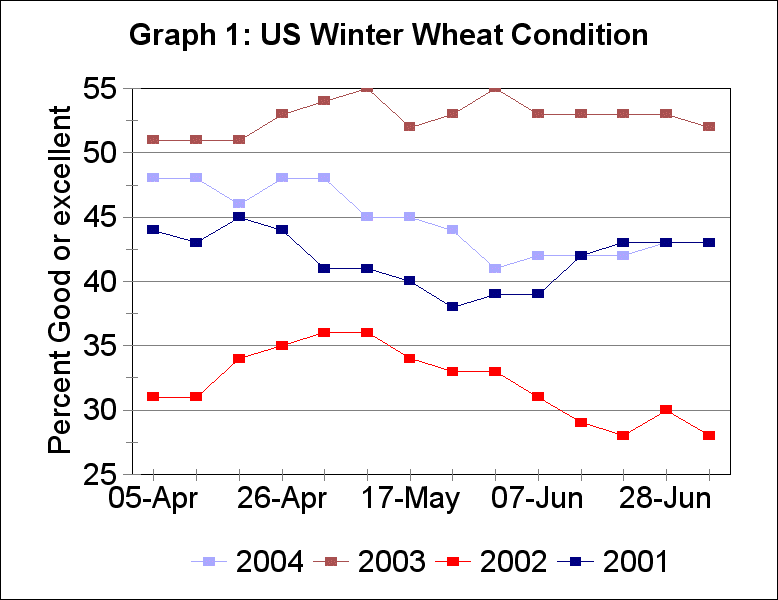
Winter wheat conditions have been unexceptional (graph 1). The USDA projects a yield of 2.84tonnes/hectare, which is marginally below the ten-year average. Winter wheat production was projected at July 1 to be 40.0M tonnes, about 15 percent less than the US consumed domestically and exported last year.
continue continued
 Source: USDA
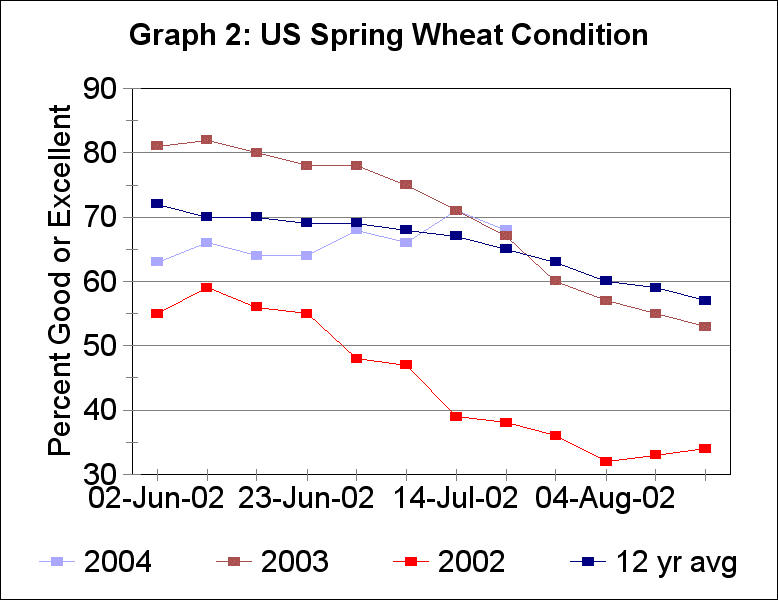
The area planted to spring wheat was about two percent below last year, and after anticipated abandonments a harvested area of 6.4M hectares is forecast. Early spring field conditions were very favourable and although crop development has been delayed because of cool weather in June, it is currently favourably rated (graph 2). Since moisture conditions are generally very adequate, yield prospects are unlikely to affected by weather condition between now and the August harvest. At July 1 the USDA was projecting relatively favourable yields with a total crop of 16.0M tonnes, about 6.4 percent below last year's harvest and about 11 percent below last year's domestic consumption and exports.
continue continued
 Source: USDA
Given that the price outlook for maize and soybeans, the two major US spring seeded crops, appeared very favourable planting competition between them was intense. Area planted to both crops increased, soybeans to a record 30.3M ha and maize to 33.5M ha, the largest area since 1985. Planting to sorghum and to a lesser degree wheat appear to have suffered.
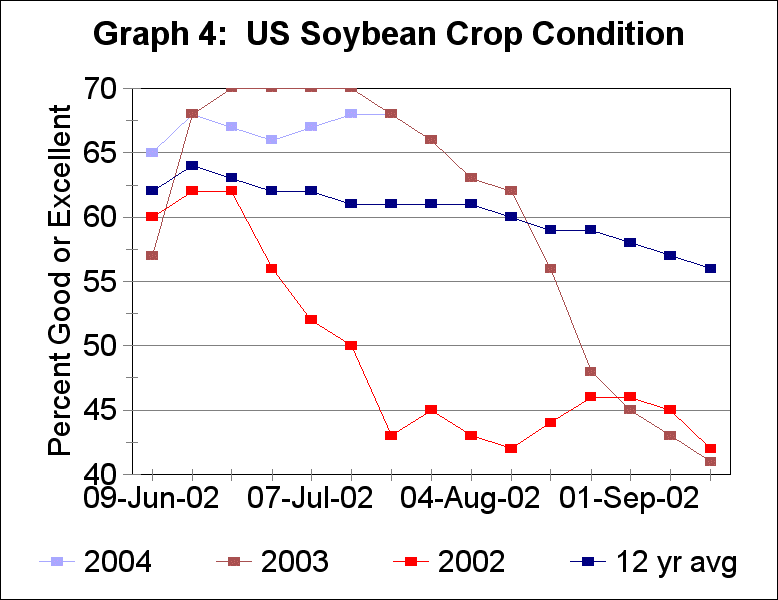
However, even with these large acreages it was evident, particularly for maize, favourable yields would be needed to meet anticipated demand. After an early start the maize crop has never really looked threatened, apart from a brief period in late May when very wet and cool conditions were a concern(graph 3). The silking, pollenation, period when the crop is particularly sensitive to high temperature has pretty well past and a record crop seems possible. The soybean crop also looks in good shape (graph 4), although it still has to pass through the soil moisture sensitive podding period in August.
continue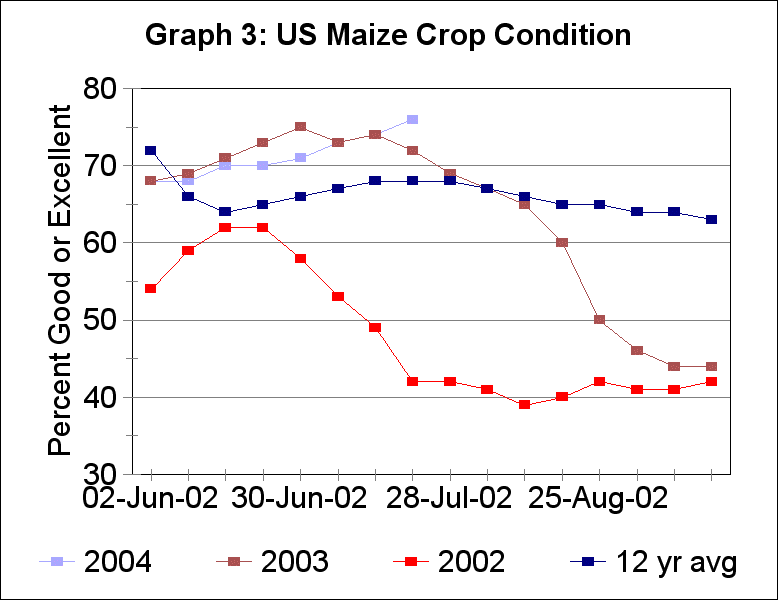 Source: USDA
continued
 Source: USDA
continued
Market Implication
Since prospects for a record maize crop have become increasingly assured, new crop, December maize futures have declined from a peak of about US$3.40 per bushel(£73 per tonne) in April to about US$2.50(£53) currently. That prices are still 40cents per bushel above year ago, probably reflects in part the weakness of the dollar and in part continued optimism about US demand.
The wheat market appears to have followed maize, the December Chicago wheat falling from US4.40 per bushel (£88 per tonne) in April to current values of around US$3.50 per bushel(£69). This together with prospects for improved crops across Europe and China have surely have an impact, as there has been no change in US wheat supply prospects and any slackening in export demand for US wheat has yet to be reflected in early export data.
New crop November soybean prices have decline from about US$8.00 per bushel(£172 per tonne) in the spring to current levels of about US$6.50(£106). This is still well above year ago levels of not much more than US$5.00.
Last year US soybean prices rose by almost 60 percent between early August and late October as unfavourable weather reduced yields by about 16 percent. Sellers are probably reluctant to miss a possible repeat opportunity and buyers anxious to avoid it. If the soybean crop develops normally the risk premium caused by this will be lost and soybean prices will decline further as happened in the maize market during July when concerns about yield loss faded with favourable weather.
Canadian Crops
Crop development in Canada this year has been inhibited by a relatively cool growing season, particularly in June, rather than moisture. Vegetatively most crops look very well, but have generally been assessed to be a week to two late, and even three weeks in Manitoba, late. This puts them at risk to early frosts which would create quality problems particularly for milling wheat. Weather conditions, however, turned warmer in mid July and very favourable harvests are yet possible.
The June Statistics Canada estimate of sown areas put total wheat area was 10.2 M hectares, down from 10.5M last year. A 12 percent cut in durum seeding more than offsetting small increases in other types. The wheat area is certainly smaller than normal, but only marginally below that seeded in recent years. The lower durum acreage almost certainly reflects adequate supplies which were uniquely sustained through two years of drought.
Of particular interest to malting barley markets is the condition of two-row barleys in Alberta. These are generally reported to be in excellent condition and are less likely to be subject to frost damage than wheat, if harvest is late and frosts are early.
Canola(OSR), flaxseed and soybean areas are up 9, 2 and 16 percent respectively. The canola area in western Canada is always sensitive to market conditions and the 5.1M hectares is towards the top end of the typical range for seeded area.
David Walker
'phone: 01603 705153
top of page